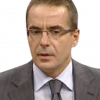
Former Deputy Prime Minister Arben Ahmetaj has denounced a scandal surrounding the Port of Porto Romano, warning that it threatens national security.
Ahmetaj provided evidence showing that the tender for the construction of this critical infrastructure, a key asset for a NATO member country, was awarded to a company with dubious links to sanctioned Russian interests.
At the center of the scandal is the winning company, Arkídon Construction Company Limited, registered in Cyprus in 2017.
It was the sole bidder after other major Western companies, including Dutch and French firms, were disqualified under unclear circumstances.
According to Ahmetaj's investigation, Arkídon is the final link in a chain of companies tracing back to the sanctioned Russian oil giant Lukoil and the sanctioned Russian businessman Albert Avdolyan.
The entire process was conducted through a secret tender. This alarming situation raises serious questions about strategic projects and the risk of allowing Russian influence over a vital national asset.
Ahmetaj exposes another scandal:"Oligarchs are working there to build, it's not being done by Alabari. They are contracted through Alabari to build three or four apartment buildings, three hotels."
Excerpt from the interview
Arben Ahmetaj: Okay? And finally, there are many details; I could go through them one by one.
Çim Peka: Because we also have other files.
Arben Ahmetaj: I conducted an investigation. I investigated who is behind this, and Albanians need to know, Mr. Peka. We're talking about a national asset that is critical infrastructure. The port is critical infrastructure. The difference between regular infrastructure and critical infrastructure is significant, we're talking about infrastructure akin to the aorta of the country. Porto Romano should practically become an economic hub for Albania.
These companies were evaluated, and still, the financial offer had not even been submitted. The company that won the right to be the sole bidder is Arkídon.
I invite investigative journalists to research Arkídon. They should also ask Jonaid and Belinda (editorial note: Jonaid Myzyri, head of the public procurement commission) and Taulant why, for what irrational reasons, two of the largest companies in the world were disqualified, one Dutch, one Chinese, when it comes to critical infrastructure that should remain in the hands of NATO ally companies. This is the logic: all critical infrastructure should be open to fair competition within NATO.
You don't need a secret tender. Simply announce: We are opening procurement for critical infrastructure, and only companies from NATO member states can participate. That's it. But he didn't. He excluded the French and Dutch companies that were part of the group and gave it to Arkídon instead.
What does this reveal?
If you look at the links I will provide for investigation, you can trace direct Russian influence, direct influence over a critical infrastructure project. The head of the organization can play games, manipulate outcomes, all while raising a toast at dinner, everyone knows the game. One particularly interesting company is Kaymanko Service Limited, which connects to Lukoil Securities Limited, owned by the sanctioned Lukoil OAO.
You can also trace a link to the Russian citizen Albert Avdolyan and to Yota Group in Cyprus, connected to the Russian interests I mentioned earlier. I have printed this for review.
I will provide the full file. We're talking about a rigged process where NATO member companies were excluded, and the contract went to Arkídon, established in 2017 in Cyprus.
Yet, the head of the organization insisted that this company be processed. Why? As I said earlier, he shifts shame and blame beyond normal limits, exhausting citizens and eroding trust. Every fault is doubled, every mistake repeated. It is unlike any democratic reasoning in the world.
He was skilled at hiding it. We can acknowledge that he deceived the public. But the fact remains: this is a clear procedural, financial, and critical infrastructure scandal in the hands of third parties.
There is a risk of arbitration and unlimited financial exposure. Who will handle this? Petriti? (Editorial note: Petrit Malaj, current Minister of Finance) Petriti is the minister of Bela. Who else? There are five ministers involved.
I sent the Nickson Peabody report to Ulsi (editorial note: Ulsi Manja, former Minister of Justice). He didn't even read it. I have no hope that the young ones will act, because Belinda controls the process.
Çim Peka: And even if they wanted to, they wouldn't know how.
Arben Ahmetaj: Exactly. These are the elements that a Finance Minister exists to manage. Petriti is there because of Bela. He even made him a deputy, like Ceno (editorial note: Ceno Klosi).
This is the Socialist Party? No, it's now the "Municipality Party." If you look closely, it's the entire municipal network that has been consolidated. You can examine this case by case. You will see that the Socialist Party has been sidelined and replaced by municipal control.
Two of the biggest concerns: first, this critical infrastructure could end up in the hands of countries that are not allies, posing a security risk; second, there is a serious risk of arbitration; third, Albania could be left without a functioning port.
I have spoken with many specialists, reviewed procedures, and studied notifications from Dubai Durrës Port. Oligarchs are working there on construction, not Alabari. They are contracted through Alabari to build three or four apartment buildings, three hotels. Find me another place in Albania where this has happened, occupiers themselves never did this.
This is the Port of Durrës. The situation is alarming. The port is shrinking, the procedure was conducted improperly, NATO member countries' companies were excluded, and now there is Russian influence involved.
This puts Albania at risk of having no second port and of entering arbitration with Dubai Durrës Port. I have documented everything in detail, including technical elements and work schedules.
Ahmetaj revealed that nearly 5,000 fixed cameras and 3,816 body cameras are part of the project. Body cameras integrated into the system cost $15,723 each.
Çim Peka: $15,000 per body camera?
Arben Ahmetaj: Yes, each connected to the central system. It's outrageous. Albanians are paying $15,723 for a single body camera. And there are two other elements. Remember, the police previously had body cameras?
Çim Peka: Yes.
Arben Ahmetaj: At that time, during Tahiri's tenure, €5.7 million were spent. Now, just the additional cost for body cameras alone is half of that fund. And don't forget the World Bank contributed $70 million for traffic monitoring. Every municipality has invested in Smart Safe Cities. Who benefits from this project? Only him. Who receives these contracts? He removed the deputy minister, forced him, and handled it personally.
Çim Peka: Who signed for this?
Arben Ahmetaj: Xhemal Qefalia, who was appointed as deputy minister.
Çim Peka: Deputy minister, yes.
Arben Ahmetaj: Yes, that's my understanding.
The police monitor everything. For example, on May 18, 2022, €800,000 was spent to connect camera systems to business networks. Why does he keep spending public funds this way? Traffic monitoring cameras cost $52,000 each, including the system. On one hand, $52,000 per camera; on the other, $15,000 per body camera. Costs are inflated sevenfold.
Even customs data show that over the past ten years, about 1 million security devices and systems worth €50 million were imported, far below the costs of these projects. Yet, he claims a "spectacular" job was done.
© SYRI.net
 PLUG/ Nga Senegali te lidhjet me Mcgonigal, lidhjet e Ron Yeffet që Plug denoncoi pak kohë më parë
 GJKKO kalon për gjykim Arben Ahmetajn për dosjen 'Buka', akuzohet për shpërdorim detyre
 Porti i ri në ‘Porto-Romano’ mes hijeve të skandaleve e abuzimit! Si po i ‘falet’ toka private investitorit strategjik ‘Lidl Albania’ për 1 euro
 Denonco

Merrni lajmet më të fundit nga SYRI.net në çdo moment dhe kudo që të jeni!