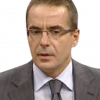
The program Plug aired on April 29, 2026, on Syri TV.
Part Two
Today we will continue to examine the links in a corrupt scheme, one not created by society, as the prime minister seeks to portray it, but by Belinda Balluku with the backing of Edi Rama. Before that, however, we will revisit some of these scandals, all centered on the Ministry of Energy and Infrastructure.
Over three seasons, Plug has investigated dozens of corruption cases, many of them directly tied to the ministry led by Belinda Balluku. The first scandal exposed involved a scheme created by Evis Berberi through the companies NET Group and DAAM shpk. Through these entities, Berberi secured more than €4 million in tenders. The reporting and subsequent investigation by SPAK into this link would open a “Pandora’s box” of corrupt schemes involving a large number of Balluku’s direct subordinates, as well as Balluku herself.
Plug has also investigated the director of Albania’s Civil Aviation Authority, Maksim Ethemaj, who, through a company registered in the names of his relatives, became the beneficiary of a license for a photovoltaic park granted by Belinda Balluku. To finance the construction of the project, Ethemaj obtained loans from the company 4AM, one of Balluku’s preferred firms. Plug has also reported that 4AM benefited from more than €240 million in public funds through dozens of tenders, many awarded by the Ministry of Infrastructure and its subordinate institutions. The company is now under investigation by SPAK for alleged tender abuses and has also obtained licenses in the energy sector.
The energy sector, in particular, has been a field through which Belinda Balluku has served not only the economic interests of private companies but also political ones. Among those linked is Fatmir Xhafaj, who appears to have drawn closer to Balluku following the imprisonment of Erion Veliaj. Xhafaj’s family members benefited from a construction permit for a photovoltaic park in the municipality of Fier, granted to a company owned by his daughter and his son-in-law, Ditjon Baboçi, a former associate of Veliaj at Tirana Municipality. A construction permit was also granted, alongside Baboçi, to Gramos Sako, owner of the company 2T and brother of Tepelena mayor Artan Sako. All of these permits were issued on land granted by Armando Subashi, in what is described as a clear violation of the law.
In the energy sector, one of the most significant scandals reported by Plug concerns the “Tigri 1” and “Tigri 3” floating power plants brought to Vlora to generate electricity. According to the investigation, the total cost of the two floating plants is expected to reach around $120 million. Their deployment in Albania involved the direct engagement of Belinda Balluku and former U.S. ambassador Yuri Kim. The controversy lies in the fact that, despite the hundreds of millions spent, the two plants are largely non-operational and, in 2025, produced electricity equivalent to just three days of the country’s domestic consumption.
Other affairs in which Belinda Balluku is said to be directly involved, as reported by Plug, concern the construction of national roads. Plug was the first to expose the scandal surrounding the Llogara Tunnel, revealing not only that the Albanian Road Authority had qualified as the winning bidder a consortium that failed to meet tender criteria, but also that the project’s costs increased by €50 million. Further investigations found that not only construction but also design and supervision tenders were carried out in violation of the law. A central issue is that the tunnel was built without two bridges that were part of the original project, while SPAK has yet to act on the matter.
Belinda Balluku is also the minister who signed off on the construction of roads such as Korçë–Ersekë, Qukës–Qafë Plloçë, the Arbër Road, Corridor VIII Elbasan–Qafë Thanë, and other national axes, with total values reaching several hundred million euros. Across these projects, there are allegations that tender winners were preselected, and that the roads were built to poor standards, resulting in widespread structural failures.
Albanian citizens are expected to pay more than $120 million for the two floating power plants in Vlora, which have not produced a single kilowatt-hour of electricity. In February 2025, Plug investigated the case involving Energy Minister Belinda Balluku. Data indicate that KESH has so far spent $40 million on infrastructure and fuel for the vessels, while the total cost of maintaining the two floating plants in Albania for two years reaches $120 million. Serious suspicions have also been raised about one of the beneficial owners of these vessels, who holds a 10 percent stake but whose identity remains undisclosed, with alleged links extending as far as Iran.
© SYRI.net
 PLUG/ Belinda Balluku shtoi miliona euro për të 'mbuluar' projektin e falsifikuar të Entela Çanos për rrugën Korçë-Ersekë
 PLUG/ NATO e pezullon, Rama biznes me Elbit System. Detaje nga kontrata qindra milionë euro 'top secret' për armatime
 Zgjedhjet në Tiranë/ Rama ia ngec Begajt shkeljen e Kushtetutës: E firmosi me vullnetin e tij
 Denonco

Merrni lajmet më të fundit nga SYRI.net në çdo moment dhe kudo që të jeni!